

City
Santorini
Santorini sits on the rim of a volcanic caldera — practical Fira, Oia's famous sunset, black-sand beaches, and Assyrtiko wine.
The caldera and the cliffside villages
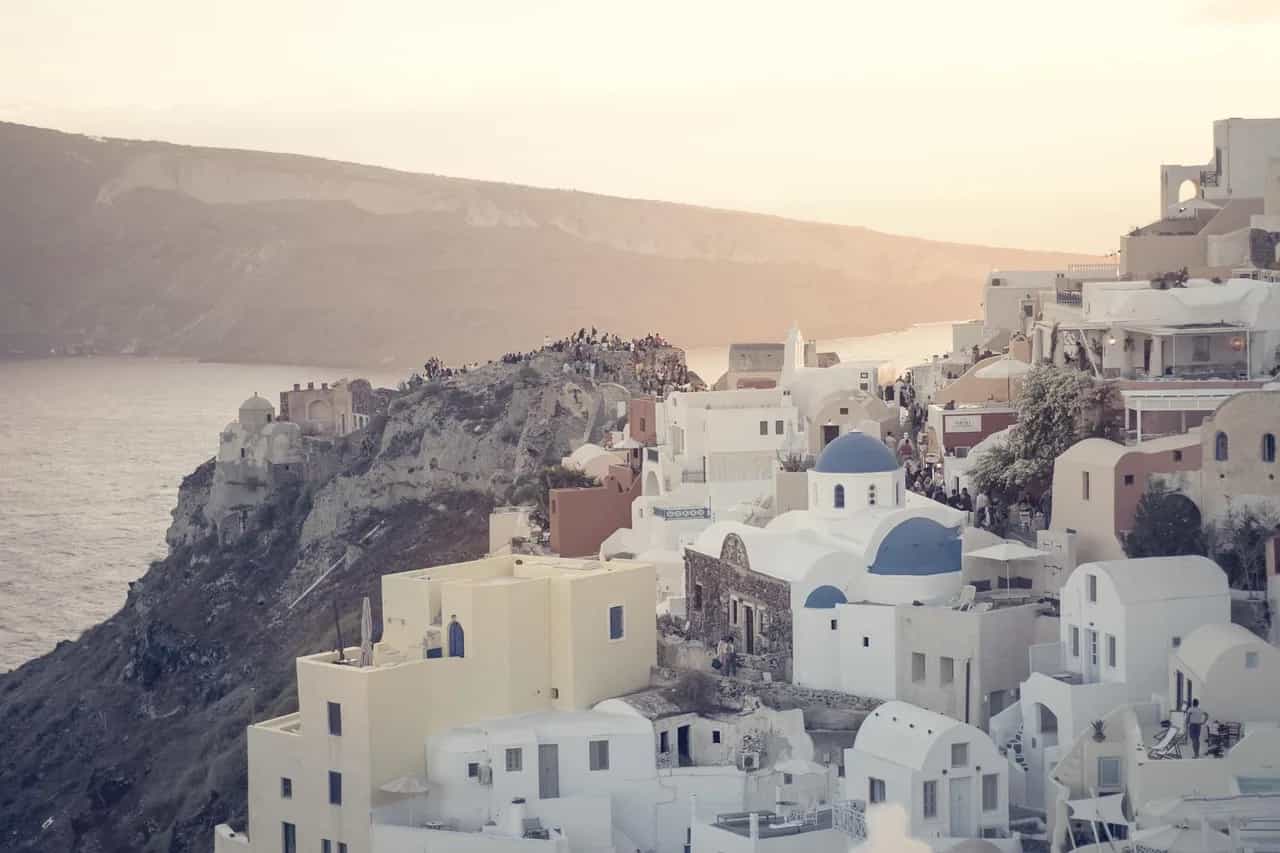
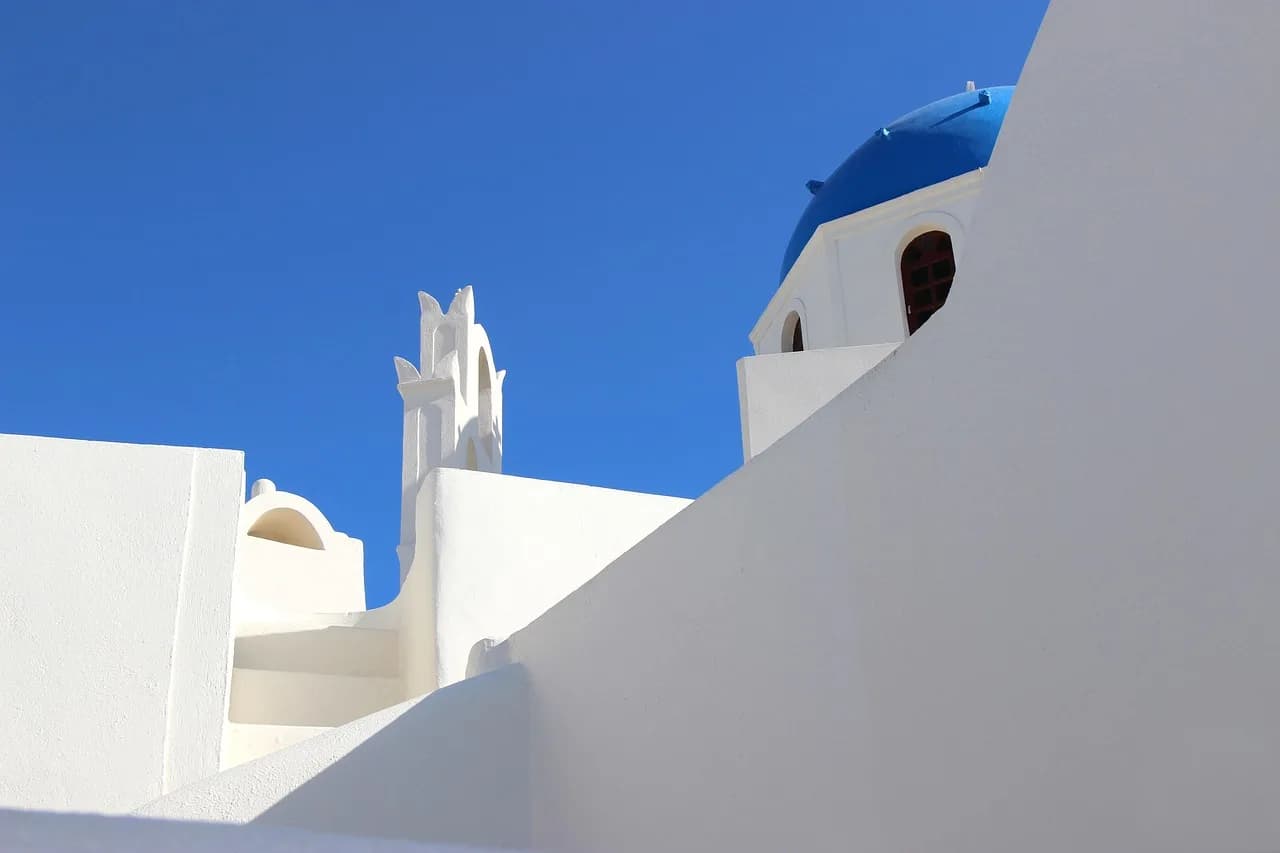
Santorini is what's left of a volcanic island that blew apart thousands of years ago, and that history explains the landscape directly: white, blue-domed houses clinging to the rim of the caldera, the collapsed crater now filled with sea. Fira, the capital, is the practical hub — shops, banks, bus connections; Oia, at the northern tip, has Greece's most photographed sunset, which fills the village with crowds every summer evening. Pyrgos and Imerovigli look over the same caldera with far fewer people, a detail agents who know the island mention before clients pick a hotel. Akrotiri, on the island's south side, preserves an ancient Minoan settlement buried under volcanic ash for centuries, a completely different image from the postcard view of the caldera.
Volcanic beaches and local food
Unlike the postcard image of Greek beaches, the sand here is black or red, not white — a direct result of the volcanic ground, visible at Kamari and Perissa. Santorini fava, a puréed yellow split-pea dish (not lentils, despite the name), and tomatokeftedes, fritters made from the island's small sweet tomatoes, are two dishes found only here, grown out of the same volcanic soil. That soil also produces Assyrtiko grapes, the base of the island's best-known wines, and Vinsanto, the local sweet wine.
Getting there and when to go
There's no direct flight from Tirana; the usual route goes via Athens, either a short connecting flight or a ferry from Piraeus port that takes several hours. July and August bring the most visitors and the highest demand for rooms; May, June, and September–October give the same sunshine without the heaviest crowds. Many hotels and restaurants close entirely from November to March, since the island runs largely on seasonal tourism — a detail that catches out travellers picturing a winter visit. The many staircases up to caldera-view hotels are a physical reality, not a scenic detail: heavy luggage means asking for help or planning ahead.
In pictures
Frequently asked questions
Why don't Santorini's beaches have white sand?
Santorini is volcanic in origin, and its sand is black or red as a direct result of that geology, not white like many other Greek beaches. Kamari and Perissa are the best-known examples of this volcanic sand.
How do you get to Santorini from Tirana?
There's no direct flight; travellers usually fly to Athens first and continue with a short connecting flight or a ferry from Piraeus port. The ferry takes several hours, depending on the type of boat.
Is Santorini open year-round?
Not entirely — many hotels and restaurants close from November to March, since the island relies heavily on seasonal tourism. Anyone planning a visit outside summer should check this in advance.
Oia or Fira, which is better to stay in?
Fira is the practical hub, with more shops, banks, and transport links. Oia has the island's most famous sunset but fills with crowds every summer evening; Pyrgos and Imerovigli offer similar caldera views with far fewer people.
What we do
Related services

Ready when you are
Request an offer
Tell us where you want to go and when. We will come back with a concrete proposal.